Advances in tissue engineering and 3D bioprinting have revolutionised the development of physiologically relevant 3D in vitro cancer models, offering a closer representation of the tumour microenvironment (TME) and enabling high-throughput drug screening.
In a recent study conducted by Carcinotech, we explored whether a 3D-printed lung cancer model developed using our proprietary methodologies could serve as a valuable tool for pre-clinical research and drug development. This research was first presented at the 2024 European Association for Cancer Research Annual Congress in Rotterdam and subsequently published in Molecular Oncology.
Goals and Findings
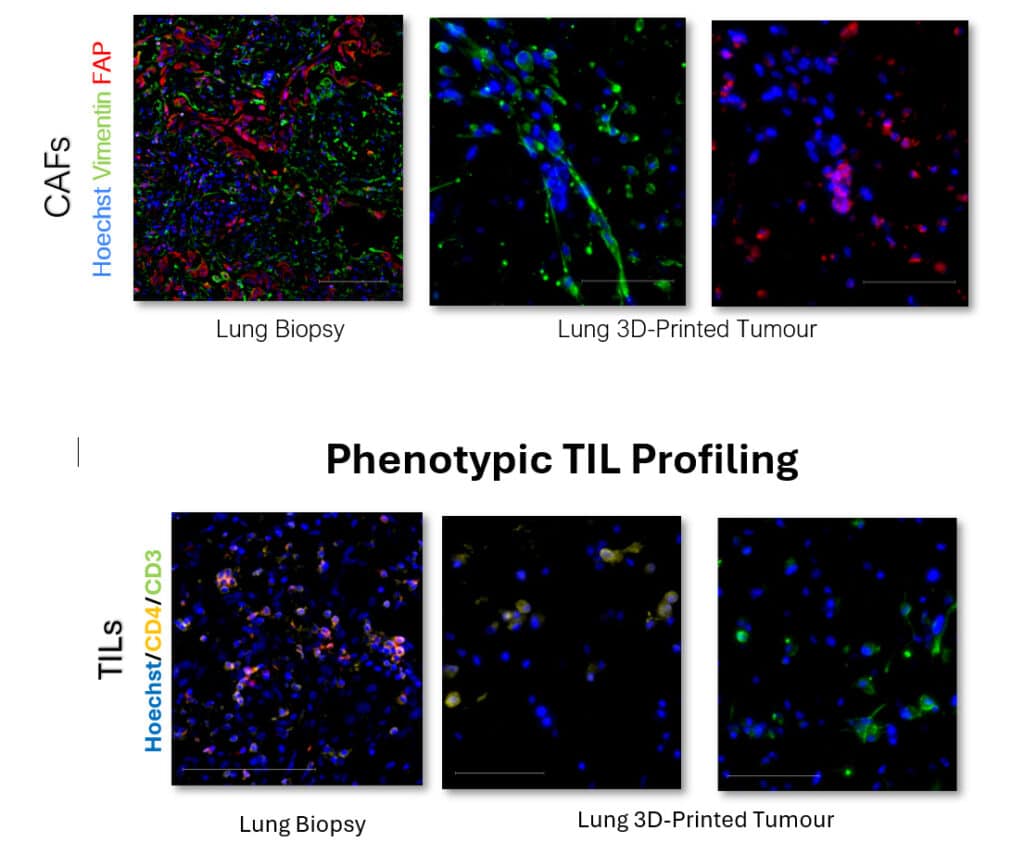
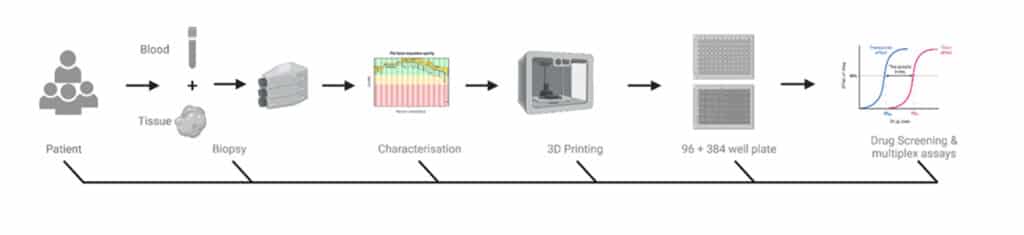
Our novel approach involves developing a patient-derived, 3D-printed lung cancer model. We utilised cells from patient cancer biopsies, including critical TME components, to replicate the TME accurately. Patient tumour biopsies were processed and sectioned into FFPE blocks, with TME assessed using immunofluorescence (IF). Patient-derived cells were cultured and 3D-bioprinted with custom TME bioink onto 96-well plates. After 14 days, we characterised the 3D model composition, ensuring it mirrored the original tumour. Additionally, we tested immunotherapeutic and standard care treatments, observing changes in cellular composition through viability, cytotoxicity, apoptosis assays, and IF microscopy.
Conclusion
Our findings demonstrate that the novel, patient-derived, 3D-printed lung cancer models successfully replicate the TME with high accuracy. Through comprehensive characterisation, we confirmed the presence of initial cell types and immune components in the 3D prints, maintaining their integrity 14 days post-printing. Additionally, the models responded effectively to standard and immunotherapeutic treatments, underscoring their potential as platforms for high-throughput drug discovery and screening. These advanced 3D constructs represent a significant step forward in developing novel and combinatorial cancer therapies.